Scorched on top, barely set in the middle, and invented by accident in a Basque bar. What San Sebastian cheesecake actually is, why the burn matters, and where to eat it in Sydney.
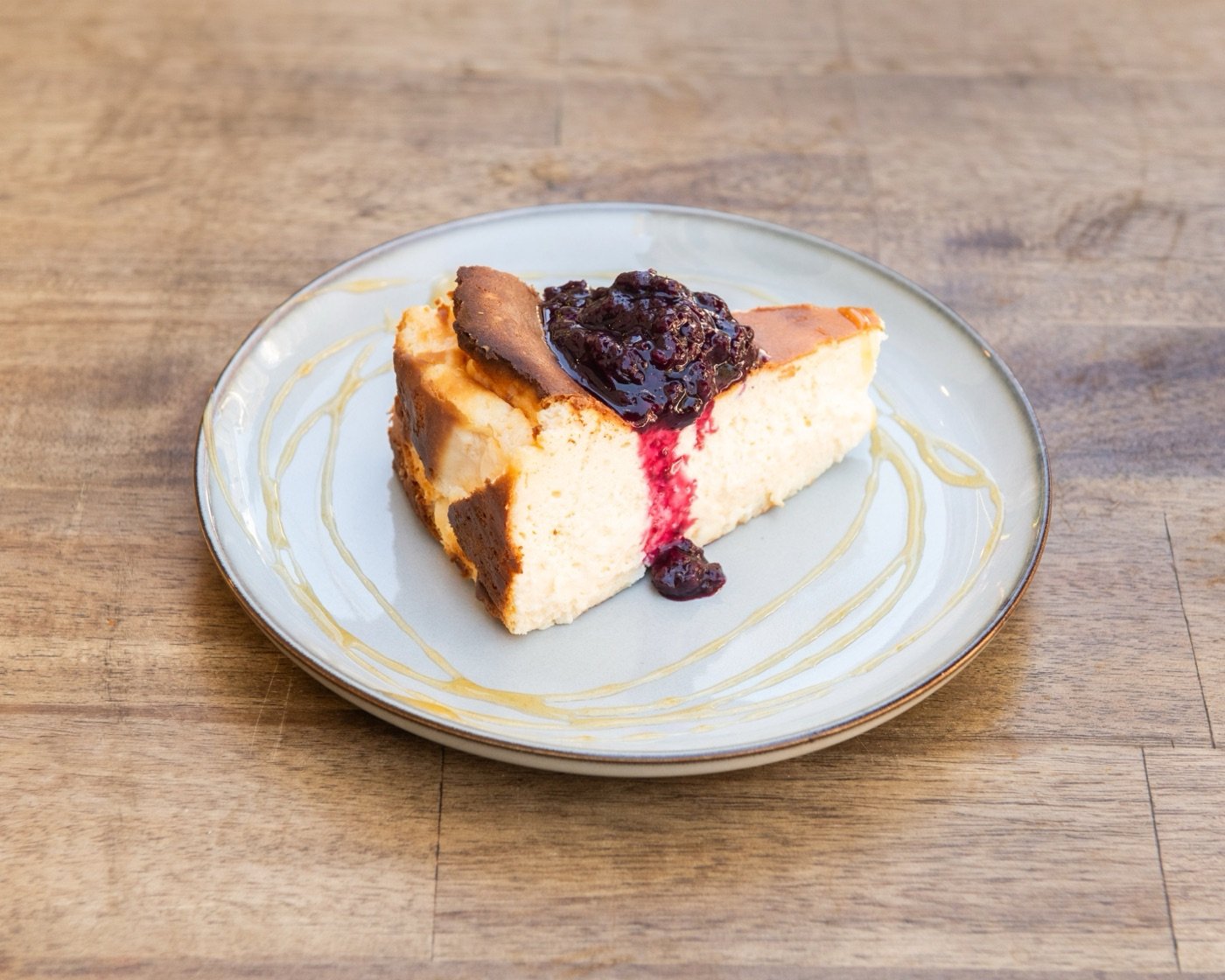
A San Sebastian cheesecake looks, on arrival, like something went wrong. The top is properly dark, somewhere between deep amber and outright black at the edges, and it has sunk in the middle where it cooled. Every instinct built by decades of neat, pale, biscuit-based cheesecake says this one has been overcooked.
It has not. That is the entire dish.
Where It Came From
The cheesecake was created at La Vina, a small bar in the old town of San Sebastian on Spain's Basque coast, in the late 1980s and early 1990s. The kitchen was chasing a cheesecake that did not need a crust and did not need a water bath, so they pushed the oven far hotter than anyone sensible would and let the top go.
It stayed a local thing for twenty years. Then, around 2019, it spread globally almost overnight, helped by the fact that it is one of the few desserts that photographs better the worse it looks. Sydney picked it up quickly, and it is now on menus that have nothing else Spanish on them at all.
Why the Burn Matters
Baked at around 220 degrees, the sugars and proteins on the surface caramelise and then go past caramelisation into something close to bitter. That bitterness is structural. Cream cheese, cream, eggs and sugar with nothing to cut them is cloying after three mouthfuls. The scorched top does the same job that the torched sugar does on a creme brulee, or that a dark espresso does next to a sweet pastry.
The second thing the high heat does is set the outside long before the middle. The centre stays loose, and as the cake cools it collapses inward into itself. A Basque cheesecake that holds a clean, flat top has been baked too gently. The sink is a sign it was made right.
How to Tell a Good One
- The top is genuinely dark, not tan. Pale means the oven was not hot enough.
- It has sunk in the centre. A flat top means it was overset.
- The middle is soft enough to move slightly when the plate is set down.
- There is no base. A biscuit crust means it is a New York cheesecake wearing the wrong name.
- It is served at room temperature, not fridge cold, so the centre is loose rather than firm.
What to Drink With It
Turkish coffee, unfiltered and unsweetened, is the best pairing we serve with it. The dessert is rich and the burn on top is bitter, and a strong, slightly gritty coffee meets both halves of that rather than fighting them. Turkish tea works too, and is the lighter option if you are eating it in the afternoon.
Where to Eat It in Sydney
We serve San Sebastian cheesecake at $14 at Cappadocia Cafe on Stanley Street in Darlinghurst. It sits on the dessert menu alongside baklava at $12, hot kunefe at $18 and tiramisu at $14, so it is easy to order two and split them across a table.
It is a Basque dessert on a Turkish menu, which is less strange than it sounds: both cuisines sit on the same Mediterranean tradition of finishing a long meal with something rich and a small bitter coffee. It has been one of our most ordered desserts since it went on.
Dessert and Turkish coffee at 82-84 Stanley St, Darlinghurst, through the day and into the evening.
Or order online for delivery: