Turks drink more tea per head than anyone on earth. Here is what çay is, how it is brewed in a double teapot, and where to drink it properly in Darlinghurst.
Sit down almost anywhere in Turkey, at a breakfast table, a carpet shop, a bus station or a friend's living room, and within minutes a small tulip shaped glass of tea will appear in front of you. This is çay, pronounced "chai", and it is not so much a drink as the background hum of Turkish daily life. Turkish tea is offered before business is discussed, after meals are finished, and at every idle moment in between.
Turks drink more tea per person than any other nation on earth. That is not a figure of speech. By most measures Turkey sits at the very top of the global tea drinking table, ahead of Ireland and Britain, at somewhere around three to four kilograms of tea leaves per person every year.
A national drink that is younger than you think
For all its dominance today, tea is a relative newcomer to Turkey. For centuries the drink of the Ottoman world was coffee, imported through Yemen and served thick and unfiltered in tiny cups. When the empire lost its southern coffee provinces after the First World War, coffee became expensive and hard to come by.
The answer was to grow tea at home. In the 1920s and 1930s the young Turkish republic encouraged tea cultivation along the mild, rainy Black Sea coast around the town of Rize. The climate turned out to be ideal, the harvests grew, and within a couple of generations tea had quietly overtaken coffee as the everyday drink of the entire country. Coffee kept its ceremony, but tea won the day to day.
What çay actually is
Turkish tea is a pure black tea, grown and processed almost entirely in Turkey itself. It is taken without milk, always, and served in a small curved glass rather than a mug. The colour is the giveaway. Properly brewed çay is a deep, clear reddish brown, and Turks have a name for the perfect shade: tavşan kanı, or "rabbit's blood", a bright brownish red that tells you the tea has been brewed with care.
The double teapot, and why it matters
The secret to Turkish tea is the çaydanlık, a stacked double teapot that does two jobs at once. Water boils in the larger pot on the bottom. A smaller pot sits on top, holding a strong concentrate of loose tea leaves steeping slowly in a little of that water.
When it is time to pour, you combine the two to taste:
- A measure of the strong concentrate from the top pot
- Hot water from the bottom pot to dilute it
- No milk, ever
- Sugar cubes on the side, added by the drinker rather than the pourer
This is why Turkish tea is so sociable. The pot can sit gently over heat for a long time, and everyone gets their glass poured exactly to the strength they like, from the same brew.
How to order it: açık, demli and the tulip glass
Because the strength is decided at the moment of pouring, there is a small vocabulary for getting the tea you want. Ask for it açık and you will get a lighter, paler glass, more water and less concentrate. Ask for it demli or koyu and you will get it dark and strong. Neither is more correct than the other. It is simply a matter of taste and the time of day.
Why the glass is shaped like a tulip
The ince belli bardak, the "slim waisted" glass, is not just decoration. The narrow waist keeps the tea hotter for longer, the flared rim stays cool enough to hold, and the clear glass shows off that rabbit's blood colour. It is also deliberately small, because Turkish tea is measured in glasses rather than cups. One is never really the plan.
Tea and coffee do different jobs
Visitors often assume Turkish coffee is the everyday national drink. It is not. Turkish coffee is the drink of occasion and ceremony, taken slowly after a meal or when a guest is being honoured. Tea is the drink of everything else, from the first glass at breakfast to the last one before bed. If you want to understand how the two sit side by side, our guide on Turkish coffee is a good place to start.
Where to drink Turkish tea in Sydney
At Cappadocia Cafe on Stanley Street in Darlinghurst we brew our çay the traditional way and serve it in the tulip glass, the way it is meant to be drunk. It sits on the drinks menu alongside Turkish coffee and ayran, the three pillars of the Turkish table.
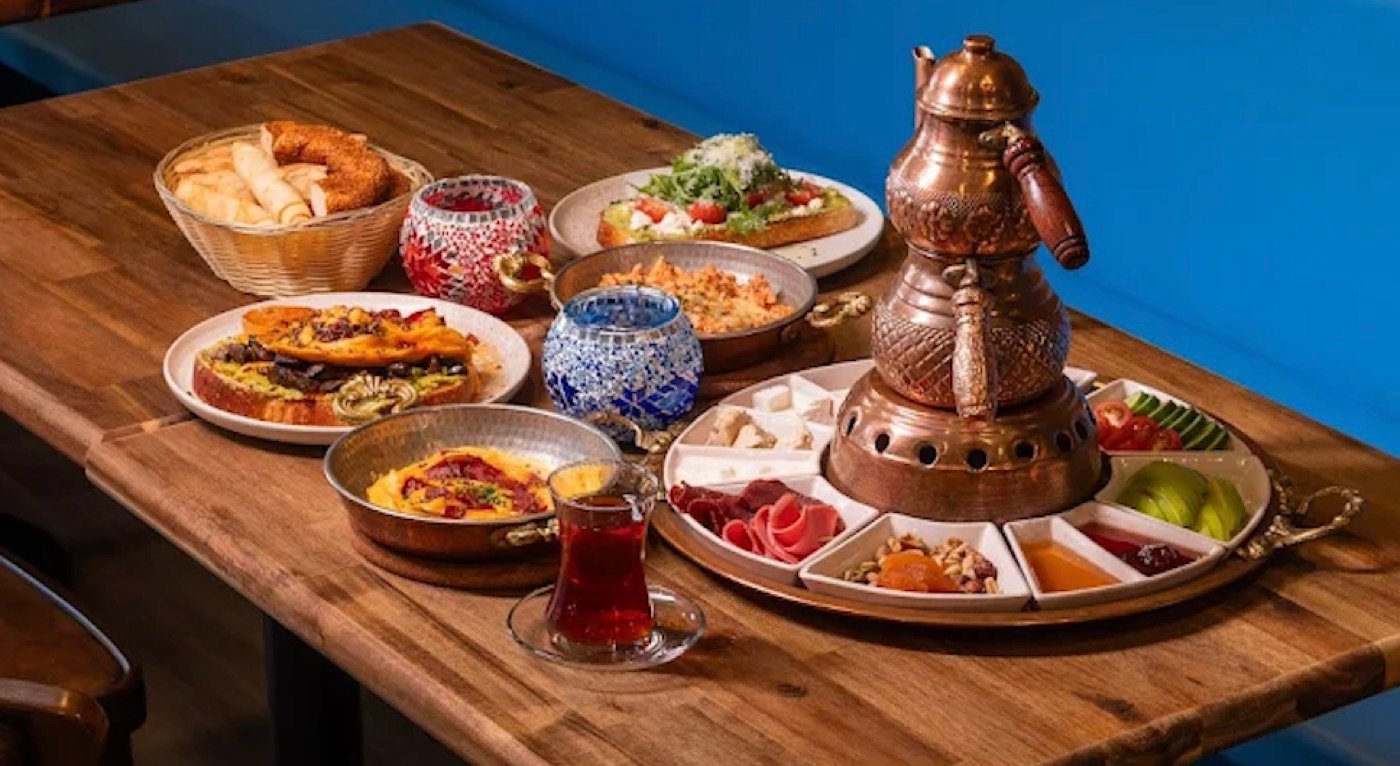
It goes with almost anything we make. Have it with a full Turkish breakfast in the morning, alongside a slice of baklava in the afternoon, or simply on its own while you watch Stanley Street go by. The second glass, in the Turkish way, is always assumed.
Brewing It At Home
The teas on our list are sold by the bag and the carton through Cappa Coffee, our online store.


Come and drink it the way it is meant to be drunk. We are on Stanley Street, Darlinghurst, open for breakfast through dinner.
Or order online for delivery: